

Brewer School Department Alternative Education Programs: A Connected Pathway from Middle School Through Graduation
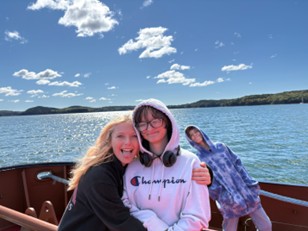
A group of Innovations students enjoys the coast of Maine at Ship Harbor Trail in Bass Harbor.
Brewer School Department’s alternative education programs have developed into a connected system of supports that begins in middle school and continues through multiple high school pathways, offering students flexible options for learning, engagement, and graduation.
What began as a small, in-person alternative education program called “ALPHA,” serving about 25 students, has expanded into a multi-tiered system that now includes a middle school alternative education program called Innovations Academy, as well as high school alternative education pathways through the ALPHA Academy in-person program, the online and hybrid Nu Program, and Extended Learning Opportunities (ELO). Together, these programs serve approximately 126 students across grades 6-12.
Staff describe the model not as separate programs but as a connected pathway built around one guiding idea: Students do not all take the same road, but they all deserve a road that leads to success.
“We didn’t build this as one fixed program,” Chris Moreau, Alternative Education Program Coordinator and Nu Program teacher, said. “We built it because students needed different ways in.”
Middle School Innovations Academy: Early Engagement and Flexible Foundations
Brewer’s middle school alternative education program, Innovations Academy, serves approximately 26 students in grades 6-8 and offers flexible schedules and individualized supports that blend academic instruction, social-emotional learning, career exploration, and community engagement. Cami Carter oversees Innovations Academy alongside her educational technician, Danny Schlaefer, creating programming designed to help students build confidence, resilience, and readiness for high school.
Innovations Academy students do not follow a single uniform schedule. Instead, programming is tailored to each student’s needs, strengths, and learning style. Instruction combines academic skill-building with applied, hands-on learning experiences. Project-based learning is a central component, allowing students to connect math, science, and problem-solving to real-world situations.
“We’re trying to make learning something students can access,” Carter said. “A lot of students haven’t had success in traditional settings. This gives them a different entry point.”
Community-based learning is a defining feature of Innovations Academy. Every week, students leave the classroom to explore careers, businesses, colleges, and community organizations throughout the region. Over the course of two years, students have explored more than 60 career pathways, including marine science, health care, plumbing, culinary arts, theater, athletics, landscape architecture, and the trades.
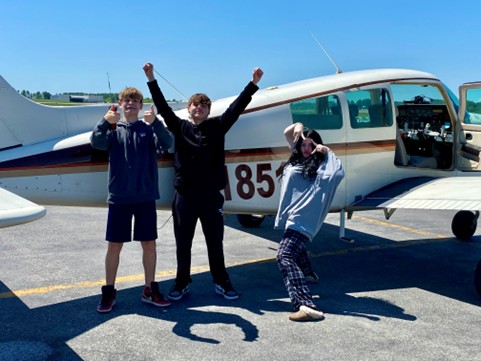
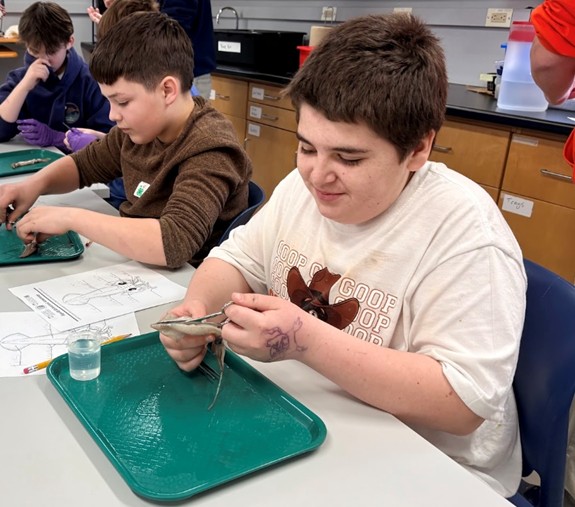
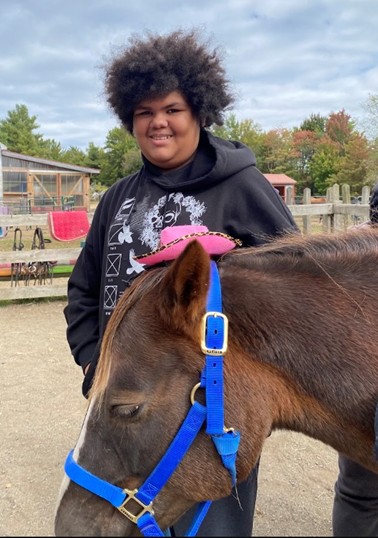
Experiences have included working with the Penobscot Theatre Company to learn about technical theater careers, visiting the University of Maine at Orono for hands-on science exploration, touring technical education programs, and engaging with Maine Maritime Academy through tugboat experiences. Students also participate in outdoor and community-based learning such as hiking, horseback riding, and ocean exploration.
“We want students to start seeing what’s possible,” staff said. “Even if they don’t know yet what they want to do, they begin to understand what exists.”
Carter said these experiences are designed not only to expose students to careers but also to help them build confidence, as they navigate unfamiliar environments, interact with adults, and persist through discomfort in new situations.
“Watching their world open up is one of the best parts,” Carter said.
Beyond academics, Carter emphasized that the program is intentionally built around relationships and emotional support. Teachers, support staff, and counselors often serve multiple roles throughout the day as instructors, mentors, advocates, and consistent/trusted adults for students navigating anxiety, family challenges, or school disengagement. Students are also connected with school-based counseling, social work supports, and community resources when needed, reinforcing a broader wraparound system designed to remove barriers to learning.
The Transition to High School: Building Individual Pathways
A key focus of Innovations Academy is preparing students for the transition to high school, with an emphasis on ensuring the shift does not disrupt support systems or academic progress.
Carter works closely with students and families to build individualized transition plans that may include traditional high school enrollment or placement into Brewer’s alternative education pathways. Staff said the goal is not to place students on a fixed track but rather to design pathways that can shift as students’ needs evolve.
Through grant funding, eighth-grade students are able to participate in summer transition activities, high school visits, scavenger hunts, and meetings with teachers, administrators, tutors, and ELO staff before entering ninth grade. These experiences help reduce anxiety and build familiarity with the high school environment.
“We’re already thinking about graduation in middle school,” Carter said. “That transition matters.”
Carter also continues to support many students into high school, maintaining communication, monitoring academic progress, and helping students navigate challenges during the critical first year of ninth grade. Staff emphasized that maintaining these trusted relationships is often what keeps students engaged and on track. Last year, all 14 eighth-grade students who transitioned to ninth grade remained on track to earn graduation credits.
Carter said the system is designed to remain flexible. Students may move into traditional high school, the ALPHA Academy, Nu Program, or a combination of supports, depending on their needs.
“It’s not about locking them into a path. It’s about finding what works,” Carter said.
Alternative Education High School Pathways: ALPHA, Nu, and ELO
At the high school level, the alternative education system expands into three interconnected pathways, each designed to provide structure while allowing flexibility and movement between programs.
The ALPHA Academy, founded by alternative educator David Morris and co-taught for more than 20 years alongside fellow alternative education teacher Steven Bloodsworth, provides in-person instruction centered on core academics with flexible pacing and individualized support. Morris and Bloodsworth serve not only as teachers but also as advisors, mentors, and a consistent adult presence, building long-term relationships with students that often extend beyond academics.
The Nu Program, overseen by Chris Moreau, blends online coursework with structured in-person supports and regular check-ins. Moreau said the Nu Program was designed not as a fully remote model but as a flexible option that allow students who struggle in traditional school settings, face attendance barriers, or experience anxiety to maintain strong relationships, have accountability, and receive counseling support.=
Moreau said Nu Program has evolved significantly since its early pandemic-era roots, expanding as student needs grew and systems adapted.
“Alternative education thrives on relationships,” Moreau said. “Whether students are in person or online, they still need connection, consistency, and someone who knows them well.”
The ELO program, overseen by Kevin Napolillo, connects students directly to real-world learning experiences through internships, certifications, and community partnerships. Students explore career pathways in fields such as construction, health care, education, and technical trades while earning credits and building postsecondary skills.
Across all three pathways, students receive academic monitoring, counseling support, and consistent engagement with staff who track both academic and personal progress. Students can move between programs as their needs change, reinforcing the idea that pathways are flexible rather than fixed.
Alternative Education Pathways as a Key to Success
Moreau said this flexibility has been key to improving outcomes and keeping students connected to school systems that might otherwise have lost them.
For decades, graduation rates at Brewer High School remained steady between 85 and 87 percent, but in the past few years, they have climbed to just below 95 percent due to these innovative alternative education pathways.
Additionally, the Brewer School Department has adopted a local Disrupted Diploma option modeled after the Maine Department of Education’s (DOE) Educational Disruption Diploma. Brewer High School’s Disrupted Diploma requires students to earn 13 credits and, because it is district-based, allows some students to earn a diploma before completing four full years of high school.
Superintendent Gregg Palmer said the option has been a lifeline for a small but significant group of students, opening pathways to better employment opportunities, community college, military service, and other postsecondary options. Palmer said the pride students show when earning a Disrupted Diploma reflects how meaningful and hard-earned the accomplishment is.
A System Built on Relationships, Flexibility, and Belief in Students
Across both middle and high school programs, staff emphasize that relationships remain the foundation of student success. Students are supported by teams that include teachers, counselors, administrators, school psychologists, social workers, and community-based partners. The programs also work closely with school-based health services and mental health supports to ensure students receive wraparound care when needed. For example, Dr. Alison Glanville, Director of Psychological Services, works closely with the ALPHA and Innovation Academys, providing weekly mental health sessions to students.
Moreau said alternative education is not about lowering expectations but about removing barriers and helping students access success in ways that work for them.
“We don’t see this as separate programs,” Moreau said. “We see it as one system that adjusts to students.”
That system includes structured supports, frequent check-ins, individualized planning, and ongoing communication with families. Family input is considered central to placement decisions and ongoing student success.
“We’re not just focused on credits,” Moreau said. “We’re focused on keeping students connected long enough to succeed.”
Moreau also noted that alternative education continues to shift as stigma around nontraditional pathways decreases, with more families recognizing that multiple routes can lead to the same outcomes.
Looking Ahead
Brewer School Department’s alternative education programs continue to evolve with a focus on strengthening transitions between middle and high school, expanding career-connected learning and increasing access to flexible pathways that respond to student needs.
Moreau said the long-term vision is a system where students can move fluidly between supports as their needs change, without losing connection to school, adults, or academic progress.
“Students don’t all take the same road,” Moreau said. “Our job is to make sure there is a road for each of them.”
Related
Legal Disclaimer:
EIN Presswire provides this news content "as is" without warranty of any kind. We do not accept any responsibility or liability for the accuracy, content, images, videos, licenses, completeness, legality, or reliability of the information contained in this article. If you have any complaints or copyright issues related to this article, kindly contact the author above.
