

Money Matters, Even (Especially) in Small Amounts

September 29, 2026
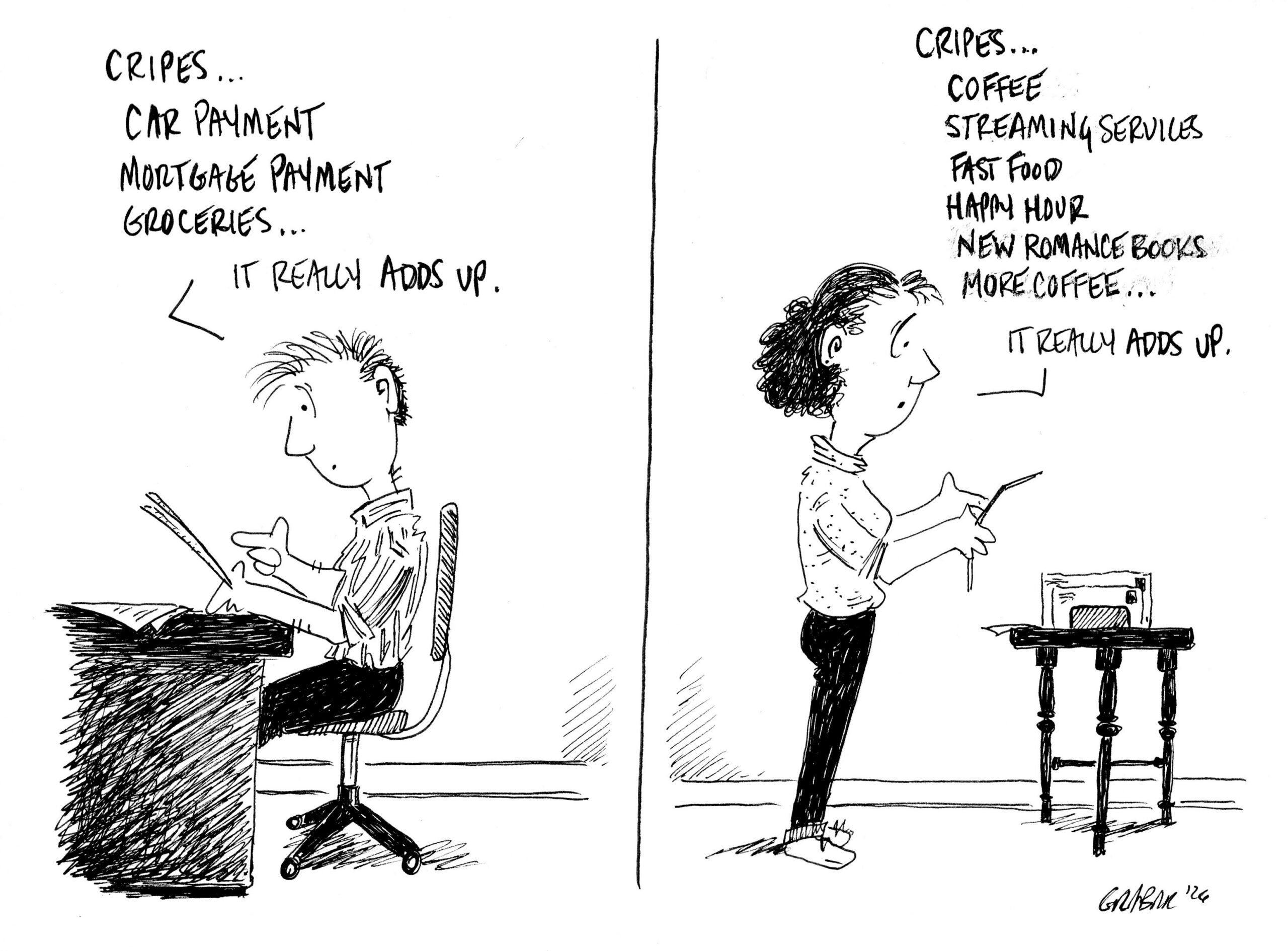
Some pieces of the personal finance puzzle are absolute, backed by numbers, and include “math always wins” situations; the power of compound interest, tax credits, tax-free growth, and higher credit scores allowing for better borrowing terms. But there are also items up for debate–especially when factors other than pure math are involved—such as whether getting a big tax refund is a good idea or how to make investment choices.
This post is on another argument that I’ve run into over the years (including debates with myself!) that has floated to the top of my list thanks to recent articles, conversations, and coaching sessions. Ultimately, I chose the above title, but it wasn’t easy, and below are some others I considered. How did I do?
- When the Small Stuff is the Big Stuff
- The Small Stuff is the Big Stuff
- Money Watch: Keep an Eye on the Small Stuff
- A Financial Journey, One Dollar at a Time
Many budgeting conversations center on cutting out lattes or canceling streaming subscriptions, essentially finding ways to save a few dollars here and there. While those habits can help, they often distract from larger expenses, such as housing, transportation and food, that have a much greater impact on long-term financial health.
Lindsay Martinez, CFP®, Kiplinger Personal Finance (online edition)
I wholeheartedly agree with that statement from their August 12th article on common money mistakes. Sort of wholeheartedly. I agree with the idea that focusing on small expenses can be a distraction from larger ones, and that large expenses have a greater impact on our finances overall. But I want to also cast a vote to keep having those conversations about lattes and subscriptions—the small stuff—because our ability to make better decisions or deal with larger expenses is often built upon our focus on and success with (proactively) managing those small expenses.
Digging a Hole with Small Shovels
I spend a lot of time reflecting on and sometimes studying my own personal finance journey. This blog, my work at FAME, teaching personal finance, and fighting the never-ending fight to make good financial decisions are all connected to those efforts. And when I think back to my missteps, there certainly were big mistakes—the car, and the next car, for example.
However, when I am digging deeper and being honest (as best as I can remember), I now see that it was the small, day-to-day spending decisions that fueled the big trouble.
My first credit card had a $500 limit. Same for the second and the third. In fact, it took years before I had a credit card with a four-digit limit. Other than new tires, I didn’t have any major money mountains to climb. I had tuition payments, but tuition was relatively affordable (state school, commuter), and way back in the day, colleges did not accept credit cards. Oh boy, the trouble I could have found (but before finishing my MBA, tuition could be put on a credit card, and yes, been there, did that). I dug my hole a few dollars at a time: clothes, movies, food, car stereos, a bike, and so many more things that should have been paid for in cash. Of course, those small purchases combined with minimum credit card payments equaled interest and compounded interest.
The car and the next car were critical mistakes and ultimately had the biggest financial impact. But the lack of attention to every dollar—every small and almost medium-sized expense, every dollar of interest paid—left me living paycheck to paycheck, without savings or even an emergency fund. That is what led me to rely on borrowing for cars, repairs on those cars, travel expenses, interest on much higher credit card balances, and, well, you get the idea. Broke. Not saving for a home, or retirement, or the next car. Not paying grad school tuition, etc.
Of course, my way was/is not the only way. Sometimes we skip straight from just becoming independent to the huge car loan. In those situations, it can be true that the big-ticket item was chicken to the egg.
Put a Big Focus on Small Expenses
The car or student loan discussion is important, but today’s target is the small stuff. So, how can we go about wrangling those little wallet drainers in order to balance the budget, avoid credit card interest, and build savings toward large purchases or future financial wellness in general?
It really takes an every-dollar-matters mentality and a commitment to that mindset over time. SMART goals can help (specific, measurable, attainable, realistic, time-bound). For example, “By cutting $100/month in expenses, I will save $1200 in one year toward…” (Check out Oh No! My Budget Is Leaking! on FAME’s YouTube channel.)
The details of this adventure will vary depending on many factors, but the underlying principle is the same. And there is a positive snowball effect to this approach. Just as small expenses can pile up and slowly but surely drain our ability to save and build wealth, reversing those expenses into small amounts of savings can turn the tide—slowly and gradually putting compounding to work in our favor, supporting our ability to save, and allowing us to approach bigger expenses from a position of strength. The opportunity cost of money decisions catches up to us, whether it’s one, two, or four bucks (or wheels) at a time.
About the Author:
Steve has worked on financial literacy efforts in Maine since 2004, and in July 2023 he started at FAME as a Financial Education Programs Specialist. He is an Accredited Financial Counselor (AFC®), a WISE-Certified Personal Finance Educator, has a B.S. in economics from Southern Connecticut State University, an MBA from the University of Hartford, and served as a U.S. Peace Corps Volunteer.
In the fall of 2003, he started a 20-year connection to the Waynflete School in Portland, where he taught math and personal finance, advised middle and upper school students, and coached baseball. Steve worked with students to create the Finance Club and an award-winning LifeSmarts team (Nationals 2013, 2014, and 2015). In 2011, Steve coached a Waynflete team to victory in the Boston Federal Reserve Economics Cup Challenge.
Steve was named Maine Jump$tart Financial Educator of the Year for 2012, was the keynote speaker at the Maine Jump$tart Annual Teacher Conferences in 2015 and 2023, and was Maine Jump$tart’s training coordinator from 2017 to 2023.
Steve and his family moved to Seville, Spain in July 2016 where he taught English and business English and learned many new personal finance lessons. He now lives in Portland with his wife and their son.
Legal Disclaimer:
EIN Presswire provides this news content "as is" without warranty of any kind. We do not accept any responsibility or liability for the accuracy, content, images, videos, licenses, completeness, legality, or reliability of the information contained in this article. If you have any complaints or copyright issues related to this article, kindly contact the author above.
